

In the repair industry, speed matters just as much as quality. Customers expect their devices, vehicles, or equipment to be repaired quickly without compromising workmanship. Long repair turnaround times can lead to dissatisfied customers, negative reviews, and lost business opportunities.
In the repair industry, speed matters just as much as quality. Customers expect their devices, vehicles, or equipment to be repaired quickly without compromising workmanship. Long repair turnaround times can lead to dissatisfied customers, negative reviews, and lost business opportunities.
The good news is that reducing repair turnaround time doesn't always require hiring more technicians. By optimizing workflows, improving communication, and leveraging repair management software like Manage My Repair, repair businesses can complete jobs faster while maintaining high service standards.
In this guide, we'll explore practical strategies to improve efficiency and reduce repair turnaround time.
What Is Repair Turnaround Time?
Repair turnaround time refers to the total time taken from when a customer submits a repair request until the repaired item is ready for pickup or delivery.
It includes:
- Customer check-in
- Diagnosis
- Parts ordering
- Repair process
- Quality inspection
- Customer notification
- Delivery or pickup
The shorter and more organized this process is, the better the customer experience.
Why Fast Repair Turnaround Matters
Reducing repair time offers several business benefits:
- Improves customer satisfaction
- Builds customer trust and loyalty
- Increases technician productivity
- Enables more repairs to be completed each day
- Reduces operational bottlenecks
- Generates higher revenue
- Improves online reviews and referrals
Fast service can become a key competitive advantage for your repair business.
1. Standardize Your Repair Workflow
One of the biggest causes of delays is an inconsistent repair process.
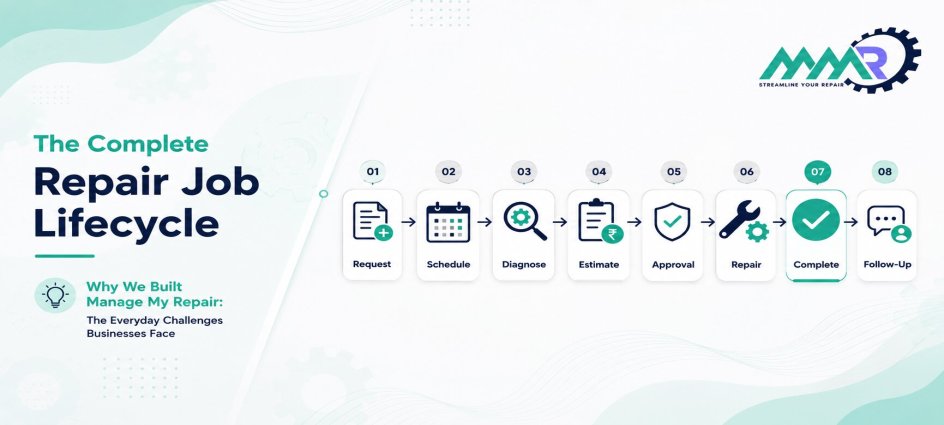
Create a standardized workflow such as:
- Customer Check-In
- Device Inspection
- Diagnosis
- Cost Estimate
- Customer Approval
- Repair
- Quality Testing
- Invoice Generation
- Customer Notification
- Pickup or Delivery
Having a consistent process minimizes confusion and keeps every repair moving efficiently.
2. Use Repair Management Software
Manual paperwork and spreadsheets slow down operations and increase the risk of errors.
A platform like Manage My Repair helps streamline the entire repair lifecycle by allowing you to:
- Create digital repair tickets
- Assign technicians instantly
- Track repair status in real time
- Manage appointments
- Generate invoices automatically
- Store customer and device history
- Upload repair documents and images
With all repair information centralized, staff spend less time searching for records and more time completing repairs.
3. Schedule Repairs Efficiently
Poor scheduling often leads to technician overload or idle time.
Best practices include:
- Assign jobs based on technician expertise.
- Balance workloads across the team.
- Prioritize urgent repairs.
- Avoid overbooking appointments.
- Track technician availability in real time.
Smart scheduling helps maximize productivity and reduce delays.
4. Keep Essential Spare Parts in Stock
Waiting for replacement parts is one of the most common reasons for delayed repairs.
Improve inventory management by:
- Tracking stock levels
- Setting low-stock alerts
- Maintaining fast-moving parts
- Monitoring supplier lead times
- Reviewing inventory reports regularly
Effective inventory management ensures technicians have the parts they need when they need them.
5. Improve Customer Communication
Many repairs are delayed because customers don't respond quickly to approval requests or status updates.
Automate communication by sending:
- Repair confirmations
- Diagnostic updates
- Estimate approvals
- Repair completion notifications
- Pickup reminders
Keeping customers informed reduces unnecessary waiting and improves the overall experience.
6. Reduce Administrative Work
Technicians should spend their time repairing—not filling out paperwork.
Automate routine tasks such as:
- Repair ticket creation
- Invoice generation
- Payment tracking
- Customer notifications
- Appointment reminders
- Service history updates
Automation frees staff to focus on productive work.
7. Track Repair Status in Real Time
Without visibility into ongoing repairs, managers struggle to identify bottlenecks.
Use repair status tracking to monitor stages such as:
- Waiting for Diagnosis
- Waiting for Parts
- In Progress
- Quality Check
- Ready for Pickup
- Completed
Real-time tracking allows managers to intervene before delays become major issues.
8. Train Your Team Regularly
Well-trained technicians complete repairs faster and with fewer mistakes.
Invest in:
- Technical certification
- New product training
- Diagnostic techniques
- Customer service skills
- Software training
Continuous learning improves both repair quality and efficiency.
9. Monitor Performance Metrics
You can't improve what you don't measure.
Track key performance indicators (KPIs) such as:
- Average repair turnaround time
- Repairs completed per technician
- First-time fix rate
- Customer satisfaction score
- Repeat repair rate
- Average waiting time
- Parts usage efficiency
Regular analysis helps identify trends and areas for improvement.
10. Maintain Complete Repair Histories
Access to previous repair records saves valuable diagnostic time.
A centralized repair history should include:
- Previous repairs
- Device information
- Warranty details
- Parts replaced
- Technician notes
- Customer preferences
Having this information readily available helps technicians diagnose issues more quickly and accurately.
 Previous Blog
How Quantum Computing Is Transforming Artificial Intelligence?
Next Blog
Why We Built Manage My Repair: The Everyday Challenges Businesses Face
Previous Blog
How Quantum Computing Is Transforming Artificial Intelligence?
Next Blog
Why We Built Manage My Repair: The Everyday Challenges Businesses Face


0 Comments on “How to Reduce Repair Turnaround Time and Improve Efficiency”