
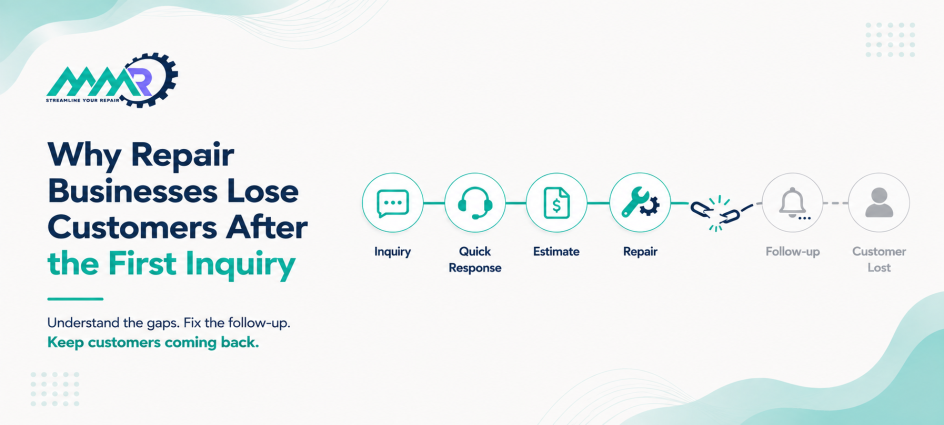
Repair shops rarely lose customers because of bad repairs. They lose them to slow replies, unclear pricing, and silence after the first inquiry. Here’s how to fix that.
Why Repair Shops Lose Customers After the First Inquiry (And How to Fix It)
After the initial inquiry, repair firms lose clients primarily due to poor communication rather than subpar repairs. Slow responses, ambiguous pricing, lack of updates throughout the job, and lack of follow-up are the four most frequent causes. With a straightforward follow-up procedure and a single location to monitor each inquiry, task, and client, all of them may be resolved.
What Is Repair Customer Churn?
When a customer who has already contacted or used your repair shop stops coming back and quietly chooses a competitor, usually without complaining, this is known as repair customer churn. It does not necessarily result in a negative review; instead, it appears as an empty rebooking calendar.
Key Takeaways
Communication, price clarity, response speed, and follow-up matter greatly to customers alongside repair quality.
The most vulnerable stage of the customer journey is the initial inquiry.
A five-step follow-up procedure is a practical customer retention strategy that many repair shops have yet to implement.
The right message at the right time is more valuable than excessive communication. Consistency matters more than volume.
Since many retention issues are organizational, a shared system can be more effective than simply hiring additional employees.
Why Do Customers Leave After the First Inquiry?
When someone contacts a repair company, they are typically under stress. A machine has stopped working, the refrigerator has broken down, or the car will not start. They are purchasing more than just a repair. They want confidence that someone will take responsibility for the issue and keep them informed.
Most people do not complain when they fail to receive that assurance. Instead, they contact the next repair shop. Owners frequently assume that clients are satisfied because there are no obvious complaints, meaning they never notice the lost business.
The 4 Real Reasons Customers Don't Come Back
1. Poor Communication
Customers have to call repeatedly for updates and remain unsure about what is happening.
The fix: Send proactive status updates at predefined stages of the repair process.
2. Slow Response and Difficult Booking
Customers may wait hours or days for a response, appointment, or estimate.
The fix: Respond promptly, communicate expected timelines, and make booking simple.
3. Unclear Pricing
Customers encounter unexpected fees or struggle to understand the final bill.
The fix: Provide a written, itemized estimate before starting the repair work.
4. A Forgettable Customer Experience
The repair is completed, but there is no follow-up, check-in, or request for feedback.
The fix: Contact customers after service, check whether everything is working properly, and invite them to share a review.
1. Poor Communication and Transparency
When customers have to chase a repair shop for information, their trust begins to decline. One of the most common communication issues in repair businesses is missing or inconsistent updates.
Providing clear information about deadlines, costs, and the next steps can make the difference between a returning customer and someone who quietly disappears.
Customers want to know what is happening with their repair, whether the estimated completion date has changed, and whether additional work is required. Keeping them informed helps build trust and encourages repeat business.
2. Slow Response, Difficult Scheduling, and Long Waits
Customers typically choose the repair shop that responds quickly and makes the process straightforward. Convenience can influence customer retention just as much as pricing.
Research on online leads published by Harvard Business Review has highlighted the importance of responding quickly to potential customers. The same general principle applies to repair businesses: a prompt response can signal reliability and make customers more confident about booking a service.
When inquiries remain unanswered, customers are more likely to contact competitors. A simple process for handling new inquiries, providing estimates, and confirming appointments can help repair shops avoid losing potential jobs.
3. Pricing Perception and Trust
Customers do not evaluate repair costs based on numbers alone. They also consider how clearly the price is explained and whether the final bill matches their expectations.
Unexpected fees or an unclear total can make customers feel overcharged, even when the price is reasonable. Unclear pricing can weaken word-of-mouth recommendations, while a transparent, itemized written estimate helps build confidence.
Before beginning work, explain the identified problem, parts costs, labor charges, estimated completion time, and any relevant warranty terms. If additional work becomes necessary, communicate the revised estimate and obtain approval before proceeding.
4. A Forgettable Service Experience
A technically successful repair can still feel like an ordinary transaction if the customer receives no communication after the job is completed.
Without a follow-up message, check-in, or review request, customers may not remember the business when they need another repair. They may simply search online and choose the first provider they find.
A short message after service can help maintain the relationship. Asking whether the equipment is working properly, offering assistance with any concerns, and making future bookings convenient can turn a one-time customer into a repeat customer.
Why Customer Retention Is Worth the Effort
Retaining an existing customer can be less expensive than acquiring a new one. Frederick Reichheld popularized research from Bain & Company showing that even small improvements in customer retention can lead to substantial profit increases, although the exact results vary by business.
Consider a repair shop that serves 200 new customers annually. This is an illustrative example, not an industry benchmark.
At a 30% return rate, the shop would receive 60 returning customers.
If an improved follow-up strategy increased the return rate to 40%, the shop would receive 80 returning customers.
That would mean 20 additional returning customers without requiring additional advertising to acquire them.
These returning customers may also generate referrals and recommendations, creating further opportunities for business growth.
How to Improve Repair Shop Customer Retention
Improving customer retention does not always require a large marketing budget or additional staff. Often, the most effective improvements involve making communication more consistent, setting clear expectations, and ensuring that every customer receives appropriate follow-up.
A structured process helps repair shops manage inquiries, provide updates, communicate costs, and maintain relationships after completing a job.
The 5-Step Repair Shop Follow-Up Process
A repair shop follow-up process works best when it has five consistent touchpoints.
Step 1: Confirm the Inquiry
When: Immediately after receiving the inquiry.
Purpose: Acknowledge the customer's message and set expectations.
Example message:
"Thanks for contacting us. We'll send your estimate by [time]."
Step 2: Send the Repair Estimate
When: After diagnosing the problem.
Purpose: Explain the repair costs and expected timeline.
Example message:
"Your estimate is ready. Here's what we found and what it will cost."
Step 3: Provide a Status Update
When: While the repair is in progress.
Purpose: Keep customers informed and prevent them from having to chase the shop for updates.
Example message:
"Quick update: your repair is on schedule and should be finished by [date]."
Step 4: Confirm Completion
When: Once the repair is finished.
Purpose: Confirm that the job is complete and invite the customer to ask questions.
Example message:
"Your repair is complete. Let us know if you have any questions."
Step 5: Check In and Request a Review
When: A few days to a few weeks after the repair, depending on the service.
Purpose: Maintain the relationship, identify any concerns, and collect customer feedback.
Example message:
"It's been a couple of weeks. How is everything running?"
Following these five steps consistently helps ensure that customers are not forgotten after their initial inquiry or after the repair is completed.
Making Communication Short, Specific, and Proactive
Effective follow-up messages answer three basic questions:
What happened?
What happens next?
When should the customer expect the next update or action?
Avoid sending unnecessarily long or generic messages. Instead, provide relevant information that helps customers understand the status of their repair.
Proactive communication reduces the need for customers to chase the shop for updates. It also helps establish realistic expectations, build trust, and reduce the risk of missed appointments or abandoned inquiries.
Turn First Inquiries into Ongoing Customer Relationships
Every inquiry represents the beginning of a potential customer relationship, not just a single transaction.
Repair shops can strengthen these relationships by remembering previous jobs, sending service reminders before the next anticipated maintenance date, and making repeat bookings convenient.
Over time, these habits can help convert one-time visitors into returning customers and referrals.
The goal is to make customers feel that the business understands their needs and will be available when they require service again.
A 5-Minute Customer Retention Check for Your Repair Shop
Answer each question with yes or no.
Do we respond to every new inquiry within the same business day?
Does every customer receive a written estimate before work begins?
Do customers receive at least one update during longer repair jobs?
Do we contact every customer after the job is complete?
Can any staff member access the history of a returning customer within seconds?
Two or more "no" answers may indicate areas where your repair shop is losing customers.
Use these questions to identify gaps in your existing workflow and prioritize improvements that can be implemented immediately.
How CRM and Better Organization Help Repair Shops Keep Customers
A repair-focused CRM (customer relationship management) tool is software that consolidates inquiries, repair jobs, customer records, and follow-ups in one place.
Many customer retention problems stem from a lack of organization rather than a lack of effort. When important details are scattered across notebooks, spreadsheets, chat threads, and sticky notes, they can easily be overlooked.
Staff members may be doing their best, but without a shared system, nobody has a complete view of which customers need updates, which estimates require follow-up, or which completed jobs need a check-in.
What Can a CRM Do for a Repair Shop?
A CRM can help a repair business:
View all open inquiries and their status in one place.
Track customers who need follow-ups or service reminders.
Preserve repair history for more personalized communication.
Standardize customer communication so that important steps do not depend on memory.
Keep track of estimates, repair progress, and completed jobs.
Help the entire team maintain consistent customer service.
How does a CRM help repair businesses retain customers? It removes much of the guesswork. Instead of relying on employees to remember each customer's situation, the system stores relevant information and helps staff identify the appropriate next action, whether that is an update, a reminder, or a review request.
How Manage My Repair Fits In
Manage My Repair is a platform for automotive, appliance, electronics, and equipment repair businesses.
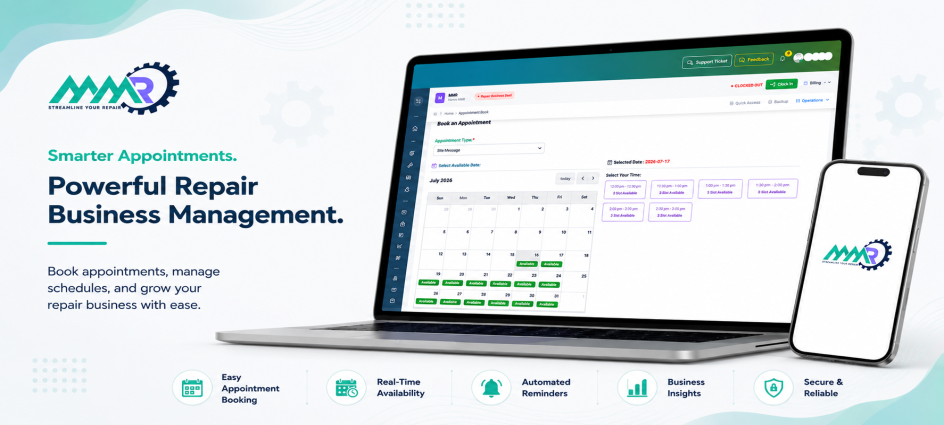
With centralized job and customer tracking and options for sending consistent follow-ups across a team, it helps keep customer inquiries, job statuses, communication history, estimates, and follow-ups organized in one place.
You can also read our article, Why We Built Manage My Repair, for a clearer understanding of the platform.
Ready to stop losing customers after the first inquiry? Start using Manage My Repair for free and keep every inquiry, job, and follow-up in one place.
Frequently Asked Questions (FAQs)
Q. Why do customers never come back to a repair shop?
The experience surrounding the repair, rather than the repair itself, is often a reason customers leave. They may choose another shop the next time without complaining because they feel forgotten due to poor communication, unclear pricing, long wait times, or a lack of follow-up.
Q. How can repair businesses improve customer retention?
Prioritize transparent pricing, prompt response times, clear communication, and a straightforward follow-up procedure after every job. Small, consistent interactions, such as a status update or a post-service check-in, can help maintain customer relationships.
Q. How can repair shops stop losing customers after the first inquiry?
Respond promptly, establish clear expectations about costs and deadlines, and ensure the interaction does not end after the initial communication. Customers are more likely to return when they feel informed and supported throughout the inquiry and repair process.
Q. How can repair shops follow up with customers effectively?
Keep follow-up messages brief and specific. Confirm the inquiry, provide updates while the repair is in progress, confirm completion, and check in afterward. Sending the right message at the right time is more important than simply sending more messages.
Q. How often should repair shops follow up with customers?
A practical starting point is to contact customers immediately after service and again a few weeks later to check whether everything is working properly. For equipment or seasonal repairs, a reminder close to the next anticipated service date can help maintain the relationship.
Q. How can CRM help repair businesses keep customers?
A CRM such as Manage My Repair keeps inquiries, job histories, and follow-up schedules organized in one place rather than scattered across notes and individual employees' memories. This supports faster responses, more personalized communication, and more consistent customer follow-up.
Q. What are common customer service mistakes in repair shops?
Common mistakes include slow responses, unclear pricing, missing job status updates, and no post-service follow-up. These issues are primarily related to communication and consistency rather than the technical quality of the repair itself.
Q. What should a repair estimate include?
A good repair estimate should include the identified problem, separate parts and labor costs, the anticipated completion date, and relevant warranty terms. Providing the estimate in writing before work begins can help prevent misunderstandings and pricing disputes.
Sources and Further Reading
Google Search Central: Creating Helpful, Reliable, People-First Content
BYU ScholarsArchive: Research Publication
Bain & Company: Zero Defections: Quality Comes to Services
Heartland Computer: Laptop Repair Services
Disclaimer
This article is for general informational purposes only and does not constitute legal, financial, or professional business advice. Results vary by repair shop size, industry, location, and implementation. The illustrative example is a simplified scenario, not a guaranteed outcome. Statistics and research referenced come from third-party sources and may change over time. Descriptions of Manage My Repair reflect information available at the time of writing, so check current features and pricing before making a decision. Repair shops should follow the consumer protection, warranty, and data privacy rules applicable in their location.
 Previous Blog
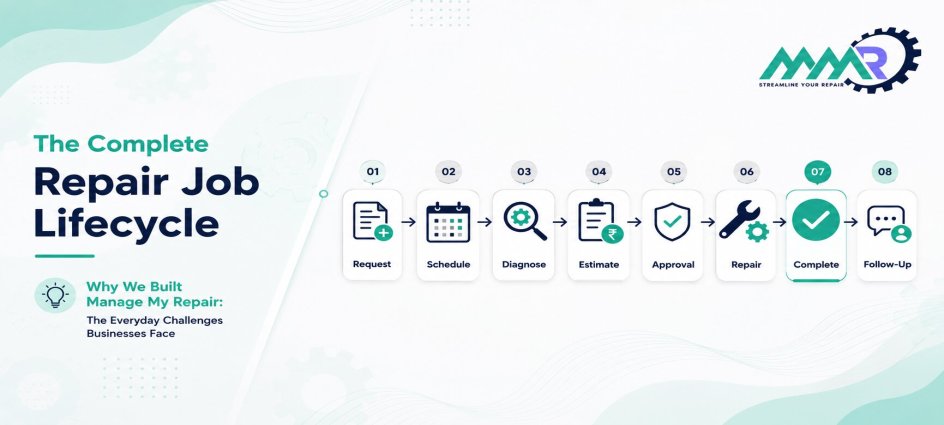
Why We Built Manage My Repair: The Everyday Challenges Businesses Face
Next Blog
CRM for Repair Shops: The Ultimate 2026 How-To Guide to Boost Retention & Revenue
Previous Blog
Why We Built Manage My Repair: The Everyday Challenges Businesses Face
Next Blog
CRM for Repair Shops: The Ultimate 2026 How-To Guide to Boost Retention & Revenue


0 Comments on “Why Repair Shops Lose Customers After the First Inquiry”